Chicago Stories
The Anatomy of Irish Dance
Clip: 10/23/2026 | 5m 51sVideo has Closed Captions
The Trinity Irish Dance Academy in Chicago explains what makes Irish dance unique.
A teacher and students with Chicago’s Trinity Irish Dance Academy explain what makes Irish dance unique, challenging, and powerful.
Problems playing video? | Closed Captioning Feedback
Problems playing video? | Closed Captioning Feedback
Chicago Stories is a local public television program presented by WTTW
Lead support for CHICAGO STORIES is provided by The Negaunee Foundation. Major support is provided by the Abra Prentice Foundation, Inc. and the TAWANI Foundation.
Chicago Stories
The Anatomy of Irish Dance
Clip: 10/23/2026 | 5m 51sVideo has Closed Captions
A teacher and students with Chicago’s Trinity Irish Dance Academy explain what makes Irish dance unique, challenging, and powerful.
Problems playing video? | Closed Captioning Feedback
Where to Watch Chicago Stories
Chicago Stories is available to stream on pbs.org and the PBS app.
Chicago Stories - New Season!
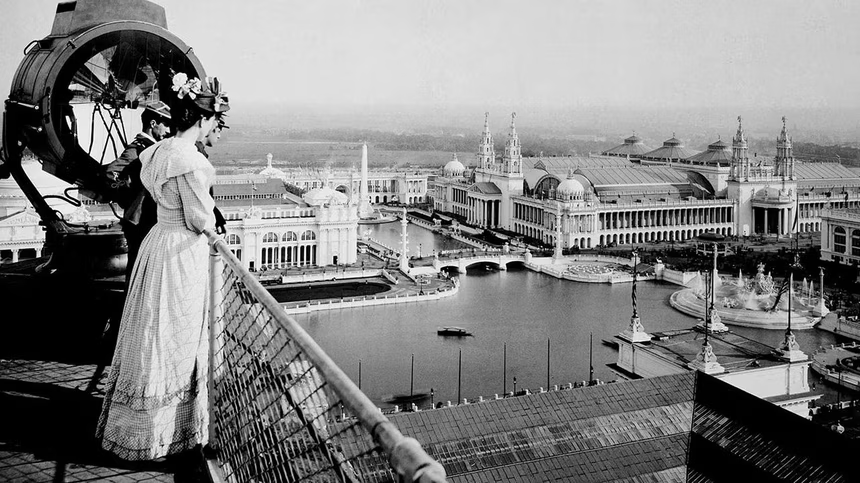
Season 6 includes: The World’s Fair of 1893, Toy Town, Skyscrapers, and Home of the Irish.Providing Support for PBS.org
Learn Moreabout PBS online sponsorship- Okay, ready?
One, two, three.
(upbeat traditional Irish music) Irish dance is part of Chicago's Irish roots, for sure.
Irish dance came to Chicago in the early 1900s.
Pat Roach would be considered the grandfather of Irish dance in Chicago, and he had dancers from his Harp and Shamrock group dancing at the World's Fair in 1934.
Irish dance became popular in the mid to late '90s, when it became part of more mainstream culture.
The Irish have been persecuted at different times in their history, and one of the things that they did to pass down their heritage and traditions was keeping their dance style alive.
It is really unique in a couple ways.
Irish dancers traditionally hold their arms at their sides unless they're dancing together as part of a team.
And like ballet, our dancers dance in turnout, but they also cross their legs over.
One of the things that we do that other dance doesn't do is stay completely square.
So other dancers move their head or shoulders, but Irish dancers stay square to the front.
As you can see, Grace's arms are pulled in very straight, and her hands are closed and kind of set right behind her hips, so she doesn't want to cause anything that would make her body go crooked or arch her back.
She wants to be in one straight line, like you can imagine that you're being held by a string from the top of your head, and everything falls into one straight line.
Irish dancers are always crossed over, and that means that she's got one knee showing in front of the other, and that when she extends, like she points her toe, she wants to make sure that from her hip down to the tip of her toe is one straight line, with no bends or moves or roundabouts to it.
Ready?
Seven, two, three, and eight, two, three.
And one, two, one, two, three.
And one, two, one, two, three.
We do dance in two different types of shoes.
We have a leather soled soft shoe, which we call soft shoes or ghillies, and those are similar to a ballet shoe, except they lace up.
The very first thing an Irish dancer would learn would just be how to position their feet.
But after we got through that, we would learn the Irish jig.
Everybody's heard of the Irish jig as the most well-known Irish dance that there is.
And then we have what are called hard shoes.
They're not metal like tap shoes.
They're actually made out of fiberglass or resin, and those make the loud rhythmic sounds.
They're not uncomfortable, I'll say that, but they don't have any sort of extra piece inside them.
So when you see a dancer in their hard shoes look like they're on point, they're actually standing on the fiberglass tip of that shoe.
We take off and land from a releve, or an on-toe position.
So that part can get uncomfortable at times because you just are never not on your toes.
And so dancers start in soft shoes, and then they move up and then they gain their other shoe.
So the whole time that you're training, you're doing both disciplines, soft shoe and hard shoe.
These girls are dressed to go to a competition right now.
So when you first start out, you can wear a pretty simple costume, a skirt and a blouse.
So the gents would dance in trousers and a shirt.
And then as you move up, you earn higher levels of costuming.
So when you get to the highest level, like our friends here, you would get what's called a solo costume, and that might even be designed custom for you.
Most of the dressmakers are still in Ireland and England.
These costumes are typically made of velvet, satin, chiffon.
They include a lot of crystals.
Most of the time we do use Swarovski crystals, so they're quite heavy and quite expensive.
And they include typically a matching hair piece, and then would have something sort of fancy on the back.
So if you want to turn around girls, these costumes include something like a traditional shawl.
Historically, Irish dance competitions, or a feis, would have been held on a Sunday after Mass.
So the girls would have gone to the competition in what we would know as our Sunday best, and their hair might have been curled to look nice for Mass first.
And so that became the look of Irish dance.
As that evolved, the hair got curlier and curlier, bigger and bigger in competition, and it became really difficult for the girls to sleep the night before, as they were trying to sleep on up to 200 rollers.
And so we moved to hairpieces.
Right now there is debate about what Irish dancers should or shouldn't look like, and I think that minimizes the amount of work that the dancers are doing on top of going to school.
They're probably going to compete at a very high level, and so they're taking care of their bodies, same as any athlete.
They just happen to, when they compete at it, do it in a very sparkly outfit.
Irish dance is a competitive sport and a performance-based activity, but there really isn't any sort of professional career other than with a performing arts company like the Trinity Irish Dance Company.
And return on investment is not financial.
It is in all the life lessons that are gained throughout the process of training.
- I like spending time with friends, and bonding with friends and teachers.
And also there are a lot of fun and cool moves.
- I love the bangs and I love the trebles, and I just love the rhythms that we make.
I mean, it's just the best.
Like, it's changed my life, the community, the teachers, people I've met.
I think that it's honestly, that's one of the best parts besides the dancing.
It's really cool to do something that not a lot of other people can do.
(upbeat traditional Irish music)
 New
Video has Closed Captions
The 1919 race riot exposes Chicago’s racial tensions and the Irish gangs caught up in it. (3m 49s)
 New
How Richard J. Daley Ruled Chicago Politics
Video has Closed Captions
Richard J. Daley built a political machine that transformed Chicago and left a complex legacy. (9m 7s)
 New
Irish Immigrants Struggle to Build a Life in Chicago
Video has Closed Captions
As newly arrived immigrants, the Irish struggled to get a foothold in Chicago. (6m 16s)
Providing Support for PBS.org
Learn Moreabout PBS online sponsorship











Support for PBS provided by:
Chicago Stories is a local public television program presented by WTTW
Lead support for CHICAGO STORIES is provided by The Negaunee Foundation. Major support is provided by the Abra Prentice Foundation, Inc. and the TAWANI Foundation.