Chicago Stories
Irish Immigrants Struggle to Build a Life in Chicago
Clip: 10/23/2026 | 6m 16sVideo has Closed Captions
As newly arrived immigrants, the Irish struggled to get a foothold in Chicago.
As newly arrived immigrants, the Irish struggled to get a foothold in Chicago, facing prejudice, poverty, and dangerous working conditions.
Problems playing video? | Closed Captioning Feedback
Problems playing video? | Closed Captioning Feedback
Chicago Stories is a local public television program presented by WTTW
Lead support for CHICAGO STORIES is provided by The Negaunee Foundation. Major support is provided by the Abra Prentice Foundation, Inc. and the TAWANI Foundation.
Chicago Stories
Irish Immigrants Struggle to Build a Life in Chicago
Clip: 10/23/2026 | 6m 16sVideo has Closed Captions
As newly arrived immigrants, the Irish struggled to get a foothold in Chicago, facing prejudice, poverty, and dangerous working conditions.
Problems playing video? | Closed Captioning Feedback
Where to Watch Chicago Stories
Chicago Stories is available to stream on pbs.org and the PBS app.
Chicago Stories - New Season!
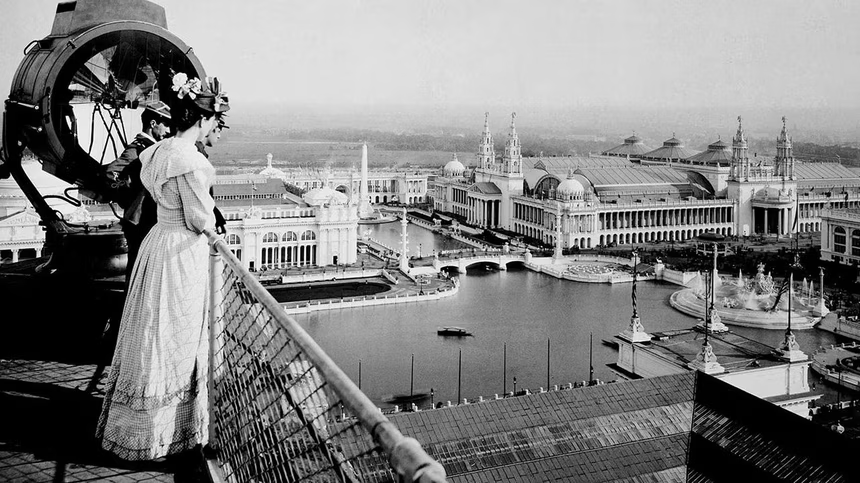
Season 6 includes: The World’s Fair of 1893, Toy Town, Skyscrapers, and Home of the Irish.Providing Support for PBS.org
Learn Moreabout PBS online sponsorship- [Reporter] On the Irish farms, the tenants depended on potatoes as the main food supply.
- [Narrator] Its scientific name is Phytophthora infestans, but most of the world knows it as potato blight.
Call it what you will, it's a microorganism that, as much as any war ever fought or doomsday weapon ever imagined, changed the face of the world forever.
- People can make jokes about the potato.
It's easy fodder.
But it's also important to remember that the potato was a totally rational and intelligent choice to make for poor people in Ireland.
- The Irish had been persecuted and oppressed in their own country, which was occupied by England since the 12th century.
Bit by bit, their rights and their land was taken away and they became tenants to often absentee landlords.
And they planted the potato because it had a ton of vitamin C and they could feed their families.
So the reason they invested everything in this one crop is because that kept them alive.
- [Narrator] For seven years, a tiny pest turned Ireland's potato crop into black mold, triggering what is now known as the Great Famine.
- Well, it's a total cataclysm.
Over the course of seven years, 1/8th of the population dies.
There really are no aspects of Irish life that aren't changed by the famine.
- [Narrator] In a country of eight million, one million men, women, and children lay dead in the houses and fields, while another two million facing starvation packed up everything they owned and boarded boats bound for the New World.
- One aspect of Irish immigration that's a little different is the Irish don't go back.
They have things like the American Wake, as if a kind of a symbolic death in many ways because you're not going to see them again.
- [Narrator] Tens of thousands died on the trip across the Atlantic, causing the boats that carried them to be dubbed coffin ships.
Those who survived gravitated to America's big cities, New York, Boston, and, of course, Chicago.
- So when the Irish came, the stereotype has been that they didn't really have a lot of skills.
They bring this sense that we are a community together and we will support each other.
Their strategy is to survive as a group.
- [Narrator] From the outset, the men who ran the city wanted nothing to do with the newcomers.
The only jobs offered to the Irish, ones no one else was willing to take.
In 1845, that meant digging out the Illinois and Michigan Canal, a waterway that would eventually link the Great Lakes to the Mississippi, without the benefit of commercial steam shovels or dredging equipment.
Instead, the Irish were given picks and shovels and told to dig the canal by hand, 96 miles worth, one treacherous foot at a time.
(gentle music) - This was an opportunity for them to make enough money to survive, but it was very hard work, 10, 12 hours of hard labor every day.
- They had to blast with dynamite.
They had to dig out swamps that released mosquitoes that led to malaria.
- There are riots.
There's violence over access to work.
Hard drinking, hard fighting, living in tents and shanty towns right by the work sites.
This was a really hard life, and the letters they're able to send back reflect that.
- [Narrator] "I wish I had you all out here.
We might be all happy today.
I had to stop writing.
My heart rose and tumbled close to my throat.
Many a tear splashed on that letter.
Love to all, from your heartbroken homesick."
- They're very emotive and they miss home, but they also know that there wasn't anything at home for them.
- [Narrator] The project took 12 years to complete and transformed Chicago from a frontier trading post to a growing, vibrant metropolis.
- You can walk along the tow path and you can get a feel and a sense of what a monumental project this was.
- [Sean] This is the way that product moved.
This is what connected things to the kind of American capitalist economy that emerges.
Immigrants were the working people who stitched the country together.
(birds chirping) - [Narrator] Walk among the headstones at St.
James at Sag Bridge Cemetery and you can see the price paid in immigrant lives.
More than a thousand dead, many of them Irish.
Men who gave up their lives in the hope of creating a better one, if not for themselves, then for those who would follow.
- It just gives you a sense of, you know, these people who lived and loved and worked really hard.
So I think there's a sense of hope, hardship yet hope.
 New
Video has Closed Captions
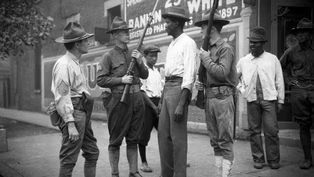
The 1919 race riot exposes Chicago’s racial tensions and the Irish gangs caught up in it. (3m 49s)
 New
Video has Closed Captions
The Trinity Irish Dance Academy in Chicago explains what makes Irish dance unique. (5m 51s)
 New
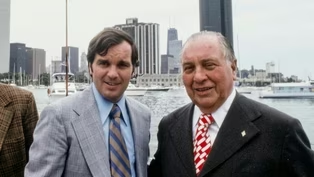
How Richard J. Daley Ruled Chicago Politics
Video has Closed Captions
Richard J. Daley built a political machine that transformed Chicago and left a complex legacy. (9m 7s)
Providing Support for PBS.org
Learn Moreabout PBS online sponsorship











Support for PBS provided by:
Chicago Stories is a local public television program presented by WTTW
Lead support for CHICAGO STORIES is provided by The Negaunee Foundation. Major support is provided by the Abra Prentice Foundation, Inc. and the TAWANI Foundation.